Featured Posts

Most selected posts are waiting for you. Check this out

FirstBank preps SMEs with strategy for success and growth ahead 2022

FirstBank preps SMEs with strategy for success and growth ahead 2022

At the webinar hosted by First Bank Limited, tagged “Is Your Business ready?” speakers gave pure insights into scaling your business for growth in the pre-election 2022 year.

The webinar was aimed towards connecting SMEs to value offerings that will impact their businesses while enhancing customer acquisition and establishing the bank as an SME-focused brand.

It was also aimed at equipping the SMEs with relevant knowledge on how to strategize for success and growth in 2022.

What the speakers were saying

Speaking at the Webinar, Gospel Obele, the Chief Economist and CEO of Streetnomics emphasized the reasons SMEs have challenges navigating appropriately with regards to market growth.

He talked about finance, infrastructure, and insecurity as factors hindering the growth of small and medium enterprises from attaining market growth, business growth, and executing business models accordingly.

He further stated that SMEs need to remodel for growth in the pre-election year by creating a business model that solves a social problem while delivering profit, hence moving from a core-product centric solution to a core-brand centric solution to unlock resilient growth in a changing economic climate like Nigeria.

In his words, “Businesses need to position revenue stream to administer solution in the socio-problem market of funding and revenue support and also in the core-business consumer market.”

The second speaker, Jovita Madojemu the Founder of Pundit Bookkeeping Services said that business owners ought to start anticipating what the new year holds as business owners should regard their businesses as a “going concern.”

She spoke about survival budget irritation, profit cashflow correlation, and performance tracking adoption stating that budgeting should be adopted for businesses in 2022 to discourage unnecessary expenses.

The expansion you’re looking for is in the planning, in working with a budget and ensuring only planned expenses are catered for,” she said.

Furthermore, she encouraged investments; investments in working capital, in people and things that will drive revenue to ultimately allow for significant returns to investors.

She talked about adopting a “Report Card” system to show what needs to be adjusted as this will help in understanding the cost components, ensuring that revenue can cover costs. Also speaking about setting performance reviews for the business, she said it is important to know if you’re at a profit or loss.

Speaking about building resilience in the business, Chike. F. Uzoma, Head, Strategy and Corporate Development FirstBank, said that it is important to anchor this on four major pillars. They are, the personality of the business, how you lead the business, i.e, leadership, how do you access change in the business and discipline.

He mentioned that business resilience has been analyzed across 6 areas, namely operational resilience, showing that a business can adapt to changes that will happen to continuously operate and serve customers, developing capabilities internally.

Commercial resilience is the heart of the business which is to attract new customers in the face of uncertainty or retain customers in a volatile environment.

Financial resilience means monitoring cashflows. He stated that FBN has partnered with SMEs to ensure that financial resilience responds to opportunities. It also means measuring the financial performance of a business.

Environmental and Social resilience which according to the speaker is very important as it relates to impacting the community positively.

Employee and workforce resilience which is considering the importance of a resilient employee and workforce to ensure the business can stand.

Future resilience means investing in product innovation, periodically reviewing trends and happenings in the business sector and area so as to change the approach, if need be. Also, strategic planning processes and strategic approaches and views must consider things that could disrupt the business.


from Nairametrics https://ift.tt/3q33ZOd
via IFTTT
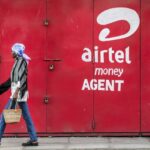
Chimera Investment invests $50 million in Airtel Africa’s mobile money business

Chimera Investment invests $50 million in Airtel Africa’s mobile money business

Airtel Africa Plc has announced an investment to the tune of $50 million by Chimera Investment LLC in Airtel Africa’s mobile money business.

This announcement comes after the telecommunications company secured an Approval-in-Principle from the apex bank to operate their mobile money services as a super-agent in the country. Chimera Investment LLC is announced as an additional investor in Airtel Mobile Commerce BV also, (AMC BV).

The investment of Chimera will take place through a $50 million secondary purchase of shares from a subsidiary of Airtel Africa Plc. Airtel Mobile Commerce, which is the holding company for several of Airtel Africa’s mobile money operations is intended to own and operate the mobile money businesses across the 14 operating countries.

Chimera’s investment through its subsidiary, Chimetech Holding Ltd, officially makes it a minority stakeholder in AMC BV along with other minority investors as Airtel Africa maintains its position as majority stakeholder.

Furthermore, the disclosure states that the transaction reflects the Group’s objective in the pursuit of strategic asset monetization and investment opportunities. The statement read, “The Transaction is a continuation of the Group’s pursuit of strategic asset monetization and investment opportunities, and it is the aim of Airtel Africa to explore the potential listing of the mobile money business within four years.”

In addition, the Group states that the proceeds from the transaction will be directed towards reducing the Group’s debt and investment in network and sales infrastructure in all fourteen (14) operating countries.

What you should know

  • Chimera Investments LLC joins TPG’s The Rise fund, Mastercard and QIA as minority stakeholders in Airtel Money Commerce BV.
  • Airtel Africa earlier this year, announced second closings of minority investments in Airtel Money Commerce by TPG’s The Rise Fund, Mastercard, and QIA, where TPG and QIA each invested a further $50 million, and Mastercard a further $25 million, in the secondary purchase of shares in AMC BV from a subsidiary of Airtel Africa.
  • Nairametrics reported that both QIA and TPG each appointed a director to the board of AMC BV and the decision was taken immediately after the first closings of the deal.
  • Prior to the second closings, Airtel Africa had received a total of $375 million from secondary sale transactions to the three investors – QIA, TPG and Mastercard. It was agreed that the balance of $125 million from the three investors will be received upon completion of the second closing.


from Nairametrics https://ift.tt/33ppDog
via IFTTT
It’s not yet time to buy the dip

It’s not yet time to buy the dip

For about two years, every time the price of popular cryptocurrencies or stocks has dropped by more than 10% it has bounced back and recovered the loss in a few weeks or days. If, like most people new to financial markets, your investment time frame is a few weeks or months, buying the dip must have worked unimaginably well for you these last few months.

That trend is shifting. Buying the dip as a quick way to make a profit is likely to stop working for a while.

We’ll explain why in a few. First, let’s get a few terms out of the way.

1. Inflation: Let’s look at inflation from the eyes of a primary school pupil. Assume he gets pocket money of ₦250 every school day and likes to buy four (4) things: a biro, a bottle of Fanta, an egg roll, and chilled Fanice yoghurt. The cost of the items over the years look like this:

Looks like not even primary school pupils are spared from the effects of inflation. The pocket money that used to be enough can now buy only half of their needs. They must now either settle for buying fewer things or beg for more pocket money.

Here’s another illustration. The government keeps a list of products and services the average household relies on. This list is popularly called the Consumer Price Index (CPI) which is used to monitor the cost of those products and services over time. If the total cost of purchasing items in the list goes up, it means that inflation is on the rise.

2. Real interest rate: Let’s assume you had put $2000 (₦1,015,200) in your PiggyVest at the beginning of the year and they promised to give you 8% of your stash by December 2021. Now, you have $2160. Your ₦1,015,200 is now worth $2160 (₦1,231,200). When you convert to Naira, you’re excited because you’ve made a +23% gain.

Or so you thought. Because inflation in Nigeria for 2021 is around 14.7%, your real interest is only 8.3% on the Naira. In essence, you can now buy a mere 8.3% more goods and services in Nigeria than you could in January, despite saving in dollars. A useful way to think of the real interest rate is to look at it as the purchasing power of your capital + profit after you have subtracted inflation.

3. Risk-free rate: Investors assume that the Government will always repay their local currency debt since they can technically print more money and pay back, so whatever rate the government is offering on government bonds is risk-free.

Now, you’re probably wondering the connection between these terms and assets dipping.

Why assets are likely to drop further

The U.S Federal Reserve has two key jobs:

  1. To manage inflation (in practice, they try to keep inflation around 2%)
  2. Keep unemployment rates low (around 3%)

At the beginning of the pandemic in 2020, nobody knew how or if the global financial system would survive. Risk, fear and uncertainty was high. Investors rushed to sell their assets since nobody knew what the economy would look like after the pandemic. By March 2020, the most important U.S stock index had lost more than 35% of its value. Creditors were unwilling to lend money to companies and the risk of a systemic failure in the global
financial markets was imminent. To avoid a global financial disaster, the U.S Federal Reserve reduced the risk-free interest rate and made it negative. In effect, if you bought a government bond after the pandemic last year, you would have lost money, despite being generally considered risk-free . This policy forced people and institutions with lots of cash to invest in the economy instead of parking it in safe government bonds.

Since then, the job market has largely recovered from the COVID-19 slump (unemployment rate is now < 4.5% from > 14% in 2020), the S&P index price has now grown by more than 100% from the lows. At 6%, the inflation rate has overshot the government’s target of 2% annual inflation by a lot.

The Chair of the Federal Reserve, Chairman Jerome Powell, has stated that inflation in the U.S is becoming a problem (> 6%). He has officially stopped using the word “transitory” (which refers to a temporary sort of inflation) to describe the current rise in inflation. To rein in the inflation, the Federal Reserve has begun tapering (reducing the economic stimulus packages such as their mortgage-backed securities purchases). A reduction in the Federal Reserve’s asset purchase program would mean an increase in interest rates on the government bond and in the broader economy. You’ll soon see why this is important.

When the real risk-free rate (remember, it’s the real interest rate on the government bond after you’ve subtracted inflation) is high and attractive. Investors prefer to invest in government bonds because they can make enough to beat inflation without taking on any risk. When the risk-free rate is low, people don’t have the option to avoid risk and earn decent interest on their capital so they get into riskier investments with the hope of making a good profit.

When the inflation rate is high and the real risk-free rate is low and negative, people are forced to invest in risky assets with the hope of beating the high inflation. This is obvious in Nigeria — people are attracted to very risky assets, in part because of the promise of high returns, since money deposited in the bank loses value quickly. Nigerians need high returns to stay above water.

Given the current market conditions and asset valuations, the Federal Reserve Chairman’s announcement that they no longer see the high inflation as transitory, and that they have begun decreasing the amount of assets that the Federal Reserve purchases to support the economy makes investors wary of investing. If the Federal Reserve increases interest rates and makes the returns attractive, a few things will happen:

i. Large investors will prefer to put their capital in risk-free government bonds

ii. Cost of borrowing will go higher across the broader economy.; Since people would be able to beat inflation by holding government bonds, if a company or individual wants to loan some money, lenders would make their interest rates relatively higher than the risk-free rate.

iii. Much less capital would be used to buy into riskier asset classes.

iv. Prices of riskier assets will drop substantially.

In summary, larger investors (institutions and HNI’s) currently invested in riskier assets (such as stocks and crypto) because the risk-free rate is low and inflation is high would move most of their capital away from risky assets and into government bonds if the risk-free interest rates become more attractive. In short, if governments make their interest rates attractive again, it will reduce the number of people and institutions willing to take risk with their capital.

The increased probability of the risk-free interest rate going higher and the suspension of the Fed’s asset purchase program will mean that capital markets would likely lose some of their gains in the midterm as people would prefer to invest their capital in government bonds and less volatile asset classes.

Over the next few months we expect higher volatility in financial markets as investors try to figure out the government’s response to high inflation and a heated jobs market. The Federal Reserve has given some direction on macroeconomic policy going into next year and it implies some tightening, which means there’s less capital available to drive up prices of financial assets. Our primary advice would be to reduce leverage on your investments and to buy dips on volatile assets with more caution.


Written by Uyoyo Ogedegbe and Oluwafemi Fadahunsi


from Nairametrics https://ift.tt/3GNnP6T
via IFTTT
What the world’s richest billionaires invest in to stay rich

What the world’s richest billionaires invest in to stay rich

In 2021, according to the World Inequality Lab’s annual World Inequality Report, billionaires saw their share of wealth increase at the highest rate on record. From 1% in 1995 to 3% in 2021, billionaires have amassed more wealth than ever before.

Most people cannot imagine what it’s like to be a member of the global billionaire class. An annual interest payment of $10 million without ever having to touch the principal would result from a 1 percent return on $1 billion.

Consequently, the ways in which billionaires invest their money shows a range of options for the world’s richest.

Cash and its equivalent

Billionaires are often frugal. Usually, they don’t spend too much, since spending would prevent them from increasing their wealth. They spend on necessities and some luxuries, but they also save and expect the rest of the family to do so as well. Some billionaires, such as Bill Gates, Aliko Dangote, Warren Buffet keep their cash in highly liquid forms or highly liquid cash equivalents.

A billionaire opens an emergency account before investing. They bank differently. They probably also have a private banker who manages their wealth, in addition to handling any bank accounts they have. They don’t need to wait in line at the bank.

Furthermore, they hold cash equivalents, which are almost as liquid as cash. Some examples of cash equivalents include money market mutual funds, certificates of deposit, commercial paper, and Treasury bills.

Global Equities and Stock Funds

Although many billionaires do invest in the stock market, we should keep in mind that billionaires are in substantially different circumstances than us. One reason is that they can afford to take more risks. A 100% loss of investment is unlikely to threaten their financial security or comfort in the future. With so much wealth, they are able to take on more risks.

One or more major companies may be controlled by ultra-rich investors. However, many billionaires only hold a handful of equity securities. Since index funds earn decent returns and don’t require management, they are popular among investors. In addition, they are well diversified and have low management fees.

The passive income dividend-paying stocks provide is also appealing to billionaires. In addition to capital appreciation, some investors are more concerned with generating current income than capital appreciation.

Since 2004, Gates has earned more than $50 billion in dividends and stock earnings, including a $3.3 billion payout from Microsoft as he owns about 1% of the world’s largest software company.

Real estate

For many years, billionaires have favoured real estate investing as their best place to keep their money. A primary residence is initially purchased and then other residences, usually for tenants, follow. Having bought some personal real estate, they have started buying commercial real estate, including hotels, stadiums, bridges, and office buildings.

Many billionaires including Larry Ellison own large real estate portfolios. In recent years, Ellison has invested steadily in real estate, building up a portfolio worth over $1 billion.

As soon as these billionaires have established themselves as buyers, real estate agents bring them deals, and getting financing becomes easier.

Millions of dollars are invested in real estate by large investors. It’s not an investment you should depend on for cash flow, but it’s a good one for the long term and a tried-and-true investment for billionaires because real estate provides passive income.

Crypto

Steven Cohen and Ray Dalio have joined the crypto craze by investing their hard-earned cash in bitcoin and other digital currencies in the hope of diversifying their investment portfolios. Elon Musk, the world’s richest man, has exposure in Bitcoin, Ethereum and Dogecoin.

Bitcoin has gained more than 20,000,000% since 2011, making it one of the most profitable investment assets of all time.

If you want to make your fortune in crypto, you’ll have to be willing to accept significant risks, whereas some billionaires like Warren Buffet, James Dimon have declined taking on such risks. In spite of this, note that only a small portion of the world’s richest use their wealth to participate in such markets.

Private equity and hedge funds

Hedge funds and private equity funds are not for everyone unless you are very rich. In contrast, private equity funds are generally invested in by large institutions such as universities or pension funds.

A qualified investor can be an individual or an organization, but they must meet certain regulations. Public equity funds must follow more regulations than private equity funds in other areas. Some ultra-rich investors invest in private equity if they are accredited investors.

Private equity is not the same as hedge funds. In order to earn outsized returns for their investors, hedge funds pool funds and pursue several strategies. Fund managers invest in hedge funds based on their belief that it would produce higher short-term profits.

Commodities

As well as being stores of value, commodities, such as gold, silver, mineral rights, or cattle, are also hedges against inflation.

Naguib Sawiris, an Egyptian billionaire who invested in gold mining earlier this year, has set up a $1.4 billion fund to hold his gold mining investments and pursue new opportunities in the sector, which he says is in need of consolidation.

Aliko Dangote, Africa’s richest man, holds significant exposure to cement, and he also holds interests in sugar, salt, oil, fertilizer, and packaged food.

Alternative investments

Some billionaires, invest a portion of their money in other alternative investments, such as fine art, musical instruments, and rare stamps. Additionally, the ultra-rich own intellectual property rights, such as songs and movies. Such investments can be highly lucrative.

David Geffen is the founder of DreamWorks Animation, and he owns art worth $1.1 billion. In 2006, he sold four pieces of contemporary art from his collection reportedly for $421 million. Wealth-X reports that Jackson Pollock sold an artwork titled, “Number 5, 1948” for $140 million, and Willem De Kooning sold “Woman III” for $137.5 million.

In conclusion, billionaires have a variety of investment philosophies, so generalizing about where they keep their money is difficult.  For the world’s wealthiest, all of the above are legitimate investments.

Many of them seek to reduce the risk of their investments, so they prefer diversified portfolios. Combining more than one investment will increase wealth.


from Nairametrics https://ift.tt/31Vh8Bd
via IFTTT
Naira appreciates at official market as pressure on external reserves mounts

Naira appreciates at official market as pressure on external reserves mounts

Naira stabilizes at black market as CBN continues its intervention in forex market

Wednesday, 15th December 2021: The exchange rate between the naira and the US dollar closed at N414.25/$1 at the official Investors and Exporters (I&E) window.

Naira appreciated against the US dollar on Wednesday to close at N414.25/$1. This represents a 0.13% gain when compared to the N414.80 that was recorded in the previous trading sessions as the pressure on the country’s external reserves continued with a decline of $157 million.

However, the naira appreciated against the US dollar on Wednesday as it closed at N572/$1. This represents a N3 gain when compared to the N575/$1 that was recorded in the previous trading session. This is according to information obtained from BDC operators interviewed by Nairametrics.

The local currency sustained its gain at the official market as the forex turnover dropped by 53% during Wednesday’s trading session.

Trading at the official NAFEX window

The exchange rate at the Investors and Exporters window appreciated to close at N414.25/$1 on Wednesday, representing a 55 Kobo gain when compared to the N414.80/$1 that was recorded at the last trading session.

The opening indicative rate appreciated to close at N413.87/$1 on Wednesday, December 15, which represents a 16 kobo gain when compared to the N414.03/$1 that was recorded in the previous trading session.

An exchange rate of N444/$1 was the highest rate recorded during intra-day trading before it settled at N414.25/$1, while it sold for as low as N405/$1 during intra-day trading.

Forex turnover at the official window dropped by 53% to trade at $177.60 million on Wednesday.

According to data tracked by Nairametrics from FMDQ, forex turnover at the I&E window declined from $377.88 million on Wednesday 15th December 2021, to $177.60 million on Wednesday 15th December 2021.

Crude oil price

Oil prices edged higher on Wednesday, rebounding from early losses as Brent Crude went up by 0.96% to trade at $74.59 per barrel after U.S. inventory data showed strong consumer demand. This is also as the Federal Reserve said it would end its pandemic-era bond purchases in March to slow rising inflation.

The Energy Information Administration reported an inventory draw of 4.6 million barrels for the week to December 10. At 428.3 million barrels, crude oil inventories remain 7% below the five-year average.

Last week’s draw compares with a modest 200,000-barrel decline in crude oil inventories for the previous week. On Tuesday, the American Petroleum Institute estimated a crude oil inventory draw of 815,000 barrels for the week to December 10.

Prices had been pressured most of the day due to ongoing concerns that supply growth will outpace demand next year and worries that COVID-19 vaccines may be less effective against the spreading Omicron variant.

The West Texas Intermediate went up by 1.13% to trade at $71.67 per barrel. Also, Natural gas went up by 2.16% to trade at $3,884 while OPEC Basket went up by 0.34% to trade at $74.28 per barrel.

On the other hand, Nigerian crude, Bonny Light dropped by 1.12% to trade at $72.69 per barrel.

Cryptocurrency watch

The world’s largest and most popular cryptocurrency, Bitcoin, went up by 2.06% to trade at $48,978.12 in the early hours of Thursday as it moved towards the $49,000 mark.

Bitcoin bounced back on Wednesday as traders reacted to the U.S. Federal Reserve’s decision to accelerate its stimulus withdrawal. Some analysts suggested the Fed decision was already priced in, which means some traders already sold long positions, which created attractive price levels for short-term buyers.

For now, crypto prices are still stabilizing after the sell-off earlier this month. Bitcoin is up about 3% over the past 24 hours, compared to a 4% rise in ether and a 14% rise in Solana’s SOL token over the same period.

Meanwhile, Ethereum, the world’s second largest cryptocurrency by market capitalization went up by 4.13% to trade at $4,025.02

External reserves

Nigeria’s external reserve dropped by 0.38% on Tuesday, 14th December 2021, to close at $40.731 billion. This represents a decrease of $157 million compared to $40.888 billion recorded as of Friday, 10th December

The consistent decline that had been experienced in the country’s reserve level could be attributed to the continuous intervention of the apex bank in ensuring the stability of the exchange rate.

It is worth noting that the nation’s foreign reserve had gained $5.99 billion in the month of October, as a result of the $4 billion raised by the federal government from the issuance of Eurobond in the international debt market.

In the month of November, Nigeria’s external reserve lost $633.47 million in value as against a gain of $5.99 million recorded in the previous month and $2.76 million gain in September 2021. On a year-to-date basis, the reserve gain has reduced to $5.74 billion.


from Nairametrics https://ift.tt/3oZ872z
via IFTTT
15 out of 22 suspects linked to Justice Odili’s home raid arraigned in court

15 out of 22 suspects linked to Justice Odili’s home raid arraigned in court

An Abuja division of the Federal High court has on Wednesday arraigned 15 out of the 22 suspects linked to the raid of the Supreme Court judge, Justice Mary Odili’s residence in Abuja. The suspects were arraigned before Justice Nkeonye Maha.

The suspects who were brought to court by police officers pleaded not guilty to the 18-count charge proffered against them by the Federal Government which bordered on forgery, criminal trespass, intimidation and extortion. While the Federal Republic of Nigeria is the complainant in the suit, 22 names were listed as defendants of which 15 were arraigned and seven at large.

In a suit marked: FHC/ABJ/CR/ 436/2021, the suspects included: Adjodo Lawrence, Michael Diete-spiff, Alex Onyekuru, Bayero Lawal, Igwe Ernest, Aliyu Umar Ibrahim, Maimuna Maishanu, Ayodele Akindipe (Aka Herbalist) and Yusuf Adamu, Bashir Musa, Stanley Nkwazema, Shehu Jibo, Abdulahi Adamu, Mohammed Yahaya and Abdulahi Usman.

Backstory

On October 29, security operatives invaded the residence of Justice Odili in Abuja with a search warrant issued by a magistrate court.

The raid on Justice Odili’s residence had been widely condemned by Nigerians, courts, interest groups, politicians, the Supreme Court, The Nigerian Bar association, human rights commission and state governors among others.

The Attorney-General of the Federation, the Inspector-General of Police, the Economic and Financial Crimes Commission and the Department of State Services had all denied involvement and authorisation of the raid.

On November 11, the police paraded 14 suspects at the Force Headquarters annex in Abuja which included a fake chief superintendent of police by the name Lawrence Adjodo.

What happened in court

  • 15 out of the 22 suspects were arraigned before justice Maha on an amended 18-count charge.
  • Counsel to the defendants told the court that they had filed an application for bail before the court.
  • The prosecution counsel did not oppose the bail application.
  • Justice Maha admitted to bail 12 out of the 15 arraigned suspects in the sum of N5 million each.
  • As part of the bail conditions, the 12 suspects are to produce two sureties each of which one must own a landed property in Abuja with a verified certificate of occupancy and the other, well-employed in Abuja with evidence of three years tax clearance.
  • The 11th who is an assistant superintendent of police, the 14th and 15th defendants were all not granted bail because their bail application was not before the court.

In case you missed it

Nairametrics reported that the Nigerian Police Force announced the arrest of 14 persons connected with the invasion. We also reported that the Supreme Court reacted to the invasion saying the attack depicted a gory picture of war by armed persons suspected to be security operatives representing government agencies.

It was also later reported that the National Human Rights Commission (NHRC) criticised the raid and called for the perpetrators of the act to be prosecuted.


from Nairametrics https://ift.tt/3m9c3vR
via IFTTT
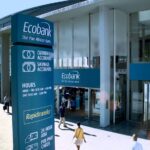
Ecobank partners five Nigerian insurers for Bancassurance

Ecobank partners five Nigerian insurers for Bancassurance

Ecobank’s Commercial Banking business has entered into a partnership with five insurance companies to offer Bancassurance solutions to Ecobank’s Small and Medium-sized Enterprise (SME) customers across markets where Ecobank operates.

This was contained in a press release by the bank and seen by Nairametrics.

According to the bank, the development will allow the customers of the bank to benefit from the convenience of being able to access relevant solutions for all their insurance needs.

What Ecobank is saying

Josephine Anan-Ankomah, Ecobank Group Executive, Commercial Banking explained that adding a comprehensive suite of Bancassurance solutions, in partnership with some of the most reputable insurance service providers across Africa, makes the bank a one-stop financial services hub.

She said, “The resilience of SME businesses is enhanced through the effective risk transfer that Bancassurance provides, while our solutions also offer our valued customers the satisfaction of knowing that they will have some protection, having learnt from the painful experiences of COVID-19.”

What you should know

  • The insurance products offered include Commercial Asset Insurance, Engineering insurance, Marine & Cargo insurance, Key Man insurance, Motor fleet Business Travel insurance, in addition to bespoke offerings such as Credit Insurance-Leasing, Credit Insurance-Invoice Discounting Without Recourse, and Agricultural Area Yield Insurance.
  • The Bancassurance service will be rolled out in phases, starting with Benin, Burkina Faso, Congo Brazzaville, Côte d’Ivoire, Gabon, Guinea Bissau, Kenya, Mali, Nigeria, Tanzania, Togo, and Uganda. Ecobank Group’s 21 other affiliates will be on board in the second phase.
  • Demand for Bancassurance services from SMEs across our markets has been on the rise as businesses seek to shake off the effects of the COVID-19 pandemic by looking for solutions to cushion themselves from similar occurrences in the future.


from Nairametrics https://ift.tt/320orra
via IFTTT
UAE-FG row: Experts laud Aviation Minister’s efforts but call for scrutiny of other nations

UAE-FG row: Experts laud Aviation Minister’s efforts but call for scrutiny of other nations

Aviation contribution to GDP drops by 38.86% in Q3 2020 - NBS, uae, Hadi Sirika, Minister of Aviation lists

Experts in the Nigerian Aviation sector have lauded the Minister of Aviation, Hadi Sirika, over his efforts to ensure the Bilateral Air Service Agreements (BASA) the nation signed with the United Arab Emirates is upheld with all fairness but called for better scrutiny of the agreement with other nations.

The experts, who spoke with Nairametrics, explained that though the last few months were filled with drama among FG, UAE and Air Peace Airlines, it is time for Sirika and his team to look beyond the Arab and scrutinize other BASA signed with over 40 other countries.

According to them, some of the countries have not been fair, especially to some Nigerian airlines operating within their routes.

What they are saying about BASA

An aviation expert, Muyiwa Lucas, lauded the efforts of the minister to compel UAE to conform with the agreement it has with Nigeria but also argued that the development would favour the partner countries more than Nigeria.

According to him, most of the agreements are only beneficial to the countries and their foreign carriers, without any reciprocal benefits to Nigeria.

He said, “Nigeria does not really benefit from the deal, especially with no National carrier or a domestic airline that has the required equipment to compete with their foreign counterparts. The partners are always quick to choose a favourable destination in Nigeria (Lagos and Abuja), while they dictate to Nigeria the airport to land its aircrafts in their countries.

“Nigerian flights are only allowed to drop passengers at Gatwick, which handled 46.1 million passengers in 2018. They don’t allow such in Heathrow airport, which is London’s main hub and also one of the world’s busiest airports with 80.1 million passengers in 2018.

What is a Bilateral Air Service Agreements (BASA)?

A bilateral air service agreement is concluded between two contracting countries and liberalizes commercial civil aviation services between those countries. The bilateral air services agreements allow the designated airlines of those countries to operate commercial flights that cover the transport of passengers and cargoes between these two countries. Also, they normally regulate the frequency and capacity of air services between countries, pricing and other commercial aspects.

Managing Director, Starburst Aviation Limited, Capt. David Olubadewo, had told Nairametrics in an interview before now that that the nation does not have the capacity/equipment to compete favourably with the countries it signed the deal with.

He said, “In most cases, BASA entails specific agreement between two partners, where parties involved will agree on the exchange of flights. It could be 10 flights weekly from Country A and same from the other country.

“So, if the US for instance, has done 10 flights to Nigeria as agreed and Nigeria has not, it will not affect the US in anyway but the disadvantaged.”

In case you missed it

On October 6, 2020, Nairametrics reported that the Federal Government announced the signing of Bilateral Air Service Agreements (BASA) with the United States, India, Morocco and Rwanda. A copy of the agreement showed that it was signed in Abuja by President Muhammadu Buhari on September 30, 2020.

Following a diplomatic row between Nigeria and the UAE over allocation of flight slots to Nigeria’s Air Peace, the latter finally agreed to concede more slots to the airline, thanks to pressure by the Aviation Minister.


from Nairametrics https://ift.tt/3DXYyoP
via IFTTT
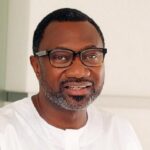
Otedola: I am not interested in being chairman of FBNH or First Bank

Otedola: I am not interested in being chairman of FBNH or First Bank

Billionaire investor and the Chairman of Geregu Energy Group, Mr. Femi Otedola has debunked speculations that he his interested in holding any board position in FBN Holdings, First Bank or any of their subsidiaries.

Mr. Otedola recently declared additional ownership in FBNH making him the single largest shareholder with about 7.57% after spending over N44.8 billion, according to findings from Nairametrics.

Otedola was recently invited by Save the Children to join the prestigious group of its Vice Presidents, in recognition of his philanthropic efforts to better the lives of children in Nigeria.

Save the Children is the second largest charity in the world after UNICEF and has Princess Anne as Patron since 2017 after serving as President since 1970.

In a brief chat, Mr Otedola was asked about his next steps after becoming the single largest shareholder of FBNHOLDINGS. He said he did not acquire the bank’s shares because he wanted to become chairman of the bank.

“I am simply an investor who saw an opportunity in the financial institution and decided to take advantage of it through the investment I have made. My interest, contrary to speculations is not to become chairman of the bank or its Holdco. Moreover, I am in semi-retirement,”  he explained.

According to him, the hallmark of any good investor is to see opportunities where others don’t, saying that he was convinced that FBN Holdings has a bright future, is strong, solid and would remain a dominant player in the Nigerian financial services sector in the foreseeable future.

Otedola praised the financial institution saying, “being the single largest shareholder doesn’t mean I must necessarily hold a position in the bank. I believe in allowing competent people run institutions in a professional manner and to the benefit of all the stakeholders. That is an institution with world-class corporate governance structure and a strong performing management that creates value and guarantees returns in form of dividends and capital appreciation”

First Bank is one of Nigeria’s largest commercial banks with total assets of about N8.5 trillion. It’s also the oldest bank in Nigeria with a sprawling deposit base of over N6.6 trillion.


from Nairametrics https://ift.tt/3q1nFlJ
via IFTTT
NEM, AIICO, 3 other insurers project N4.7 billion PAT in Q1 2022

NEM, AIICO, 3 other insurers project N4.7 billion PAT in Q1 2022

Analysis by Nairametrics has shown that a total of five Nigerian insurers namely; NEM Insurance, AIICO Insurance, Cornerstone Insurance, Consolidated Hallmark Insurance and Linkage Assurance are expecting to earn N4.7 billion Profit After Tax, PAT, in the first quarter of 2022.

This is according to financial statements sourced from the Nigerian Exchange, which show the earnings forecast for the insurers.

From the reports, NEM Insurance is expected to lead others with PAT of N2.4 billion followed by AIICO insurance with N1.1 billion while Cornerstone insurance, Consolidated Hallmark and Linkage Assurance are expected to respectively rake in N413 million, N390 million and N374 million.


NEM Insurance

NEM insurance forecasts a gross premium written at N12.2 billion in the first quarter of 2022, a 72% increase from the N7 billion in the third quarter of 2021, as well as a gross premium earned which is expected to hit N11.7 billion against N6.1 billion as of September 30th 2021.

The net premium income is expected to rise immensely reaching N9.22 billion, a significant improvement from the 4.3 billion in the third quarter of 21.

Similarly, claims on expenses in the early months of next year is expected to record N3.4 billion with underwriting expenses at N3 billion leaving the underwriting profit to close at N3.5 billion and the PAT at N2.4 billion.


AIICO Insurance

AIICO Insurance forecasts a gross written premium at N25 billion in the first quarter of 2022 with a gross premium income expected to be valued at N19 billion, translating into an unexpired risk premium at 5.6 billion.

According to the insurer, the non-life business represents 30% of the stated GWP while the ordinary life, group life and annuity business represent 43%, 9% and 2% respectively.

With a total reinsurance cost at N2.6 billion, projected at an average of 10% of gross written premium, the net premium income is predicted to close at N16.9 billion and total insurance income expecting to hit N17 billion.

Total net claims incurred during the period forecast is N9.9 billion and the total underwriting cost will expectedly value N17 billion. Total underwriting profit during the period is expected to value N459 million and investment income and other income to value N3.2 billion while the profit before tax will value N1.2 billion in the first three months of next year.

Notably, AIICO insurance stated that investment will be driven largely by bond investment and investment in other short term financial assets.


Cornerstone Insurance

Cornerstone insurance expects gross premium income to reach N9 billion in the first quarter of next year; the amount represents a huge difference from the N4.8 billion in the third quarter of 2021.

Also, the insurer expects a net earned premium at N2.3 billion in the period ended 31st March 2022 compared to the N1.3 billion as at 30th of September 2021.

While investment income is expected to rake in N756 million, and the net operating income at N1.7 billion.
Similarly, operating expenses is expected to close at N1.1 billion and the profit for the period to close at N590 million with PAT at N413 million.


Consolidated Hallmark Insurance

Consolidated Hallmark Insurance expects to rake in a total gross premium of N4.6 billion in the first quarter of 2022 with a net premium of N2.8 billion in the first quarter of 2022.

The total claims expected to be paid out during the forecast period is N968 million compared to the N632 million in the third quarter of 2021.

While investment income and net operating income will expectedly reach N407 million and N2.8 billion in the first quarter of 2022, commission incurred and underwriting and management expenses will expectedly close at N764 million and N869 million.

Also, the insurer predicts that the profit before tax during the period will expectedly reach a N572 million and profit for the period will value at N389 million.


Linkage Assurance

Linkage Assurance forecasts total gross premium written at 4.5 billion in the first quarter of 2022. Compared to the GPI in the third quarter 2021 which recorded N2.1 billion, this represents 113% increment.

However, the net earned premium is expected to land at N1.8 billion during the forecast period against the N1.6 billion in the third quarter of 2022, an indication that a large chunk of the written premium will likely be unearned.

The net claim incurred and investment income in the early quarter of 2022 is predicted at N909 million and N816 million depicts a slight increase from the N751 million and N754 million in the third quarter of 2021 while the net operating income and underwriting expenses is expected to reach N2 billion and N1.6 billion respectively.


What you should know

Despite the uncertainty which the year 2022 holds as a result of Omicron, the new Covid variant, insurers are optimistic that earnings expected in the next six months will be much more than what was seen in the last quarter ended 30th September 2021 as all insurers expect an improved performance from what was seen in the past quarter.

In a recent report, the World Health Organization, warned that the Omicron Coronavirus variant is more transmissible than the Delta Strain and reduces vaccine efficacy but causes less severe symptom.


from Nairametrics https://ift.tt/3GPbn6R
via IFTTT